 A Positively Moving Experience

How to Pack Your Kitchen Before Your Move
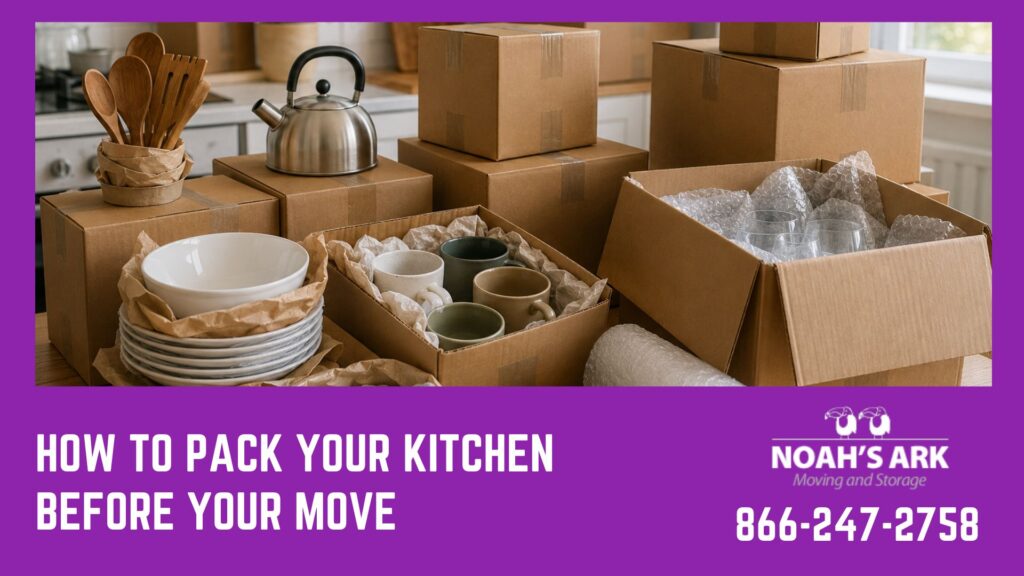
Moving your kitchen can feel really overwhelming because kitchens are pretty much the most used and cluttered spaces in any home. From fragile glassware to bulky appliances, every item requires a different packing approach. Planning ahead and using the right materials can prevent serious damage to your belongings and save time during unpacking. A well organized kitchen packing strategy also reduces a lot of stress on moving day. Here at Noahs Ark Moving and Storage, we help customers protect all of your most delicate items with the following useful proven methods:
Start With a Kitchen Packing Plan
Packing your kitchen begins with sorting and planning before you touch a single box. This helps you avoid packing items you no longer need and keeps everything organized. Start by grouping similar items together so unpacking becomes way easier later. It is also helpful to set aside essentials you will need right before and after the move. According to the National Association of Professional Organizers, reducing household clutter can cut moving time by up to 40 percent.
- Declutter First – Go through cabinets and drawers to donate or discard unused items. This reduces the number of boxes you need.
- Group Similar Items – Keep cookware, utensils, and pantry goods separated so unpacking is logical and efficient.
- Set Aside Essentials – Pack a small box with items like a coffee maker, utensils, and a few dishes for use right away.
- Label Everything Clearly – Write contents and destination room on each box to avoid confusion later.
- Use Small Boxes for Heavy Items – Items like canned goods can become too heavy in large boxes.
- Plan Packing Timeline – Start packing non essential items at least one to two weeks before your move.
Use Proper Protective Packing Materials
The right packing materials can make the difference between arriving with intact dishes or dealing with costly damage. Kitchens contain many fragile items, so investing in quality supplies is important. Use sturdy boxes, packing paper, and cushioning materials to prevent shifting. Avoid common mistakes like using newspaper directly on dishes, as ink can stain surfaces.
- Use Packing Paper Instead of Newspaper – Packing paper prevents stains and provides a clean protective layer.
- Wrap Items Individually – Each glass or dish should be wrapped separately to avoid contact damage.
- Add Cushioning Layers – Use bubble wrap or towels to fill gaps and prevent movement inside boxes.
- Reinforce Box Bottoms – Use extra tape to support heavier kitchen items.
- Pack Plates Vertically – Plates are less likely to break when packed on their sides instead of stacked flat.
- Label Fragile Boxes Clearly – Mark boxes as fragile so movers handle them with care.
Packing Appliances and Specialty Items Carefully
Kitchen appliances and specialty items require extra attention because of their size and general complexity. Small appliances should be cleaned and dried before packing to prevent mold or odors. Larger appliances may need professional handling, especially if they involve water or gas connections. Its really important to secure loose parts and cords to avoid damage.
- Clean and Dry Appliances – Moisture can lead to mold growth during transit.
- Secure Loose Parts – Remove and wrap detachable components like blender blades or mixer attachments.
- Wrap Cords Safely – Coil cords and secure them with ties to prevent tangling.
- Use Original Boxes if Available – These provide the best fit and protection for appliances.
- Protect Sharp Items – Knives should be wrapped in thick paper or blade guards to prevent injury.
- Consult Professionals for Large Appliances – Items like refrigerators may need special preparation.
Stay Organized for an Easier Unpacking Process
Packing is really only half of the moving process, and how you organize your boxes will determine how easy the whole process of unpacking becomes. Keeping a consistent labeling system and inventory can save hours of searching later. It is also helpful to pack by specific zones so each section of your kitchen is unpacked together.
- Create an Inventory List – Track what goes into each box for quick reference.
- Color Code Boxes – Assign colors to kitchen zones for easier identification.
- Keep Similar Items Together – Avoid mixing unrelated items in the same box.
- Stack Boxes Strategically – Place heavier boxes at the bottom and lighter ones on top.
- Communicate With Movers – Let your moving team know which boxes need extra care.
- Unpack Your Essentials First – Start with items you need immediately to get your kitchen functional.